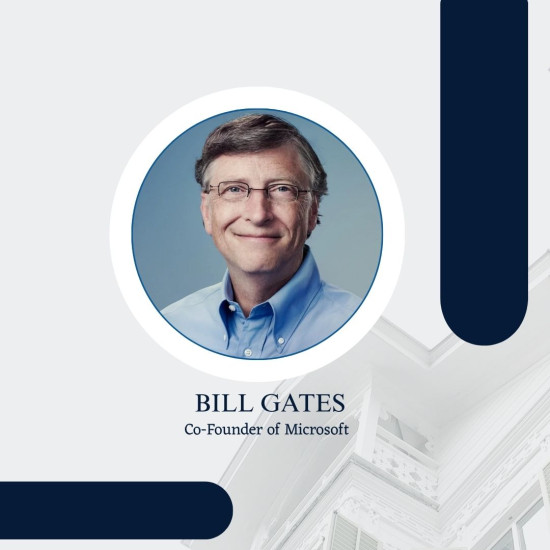
Bill Gates is not just a tech entrepreneur—he is a visionary who transformed how the world uses computers and later redefined what it means to give back to society. As the co-founder of Microsoft, he played a pivotal role in making personal computers accessible to billions, shaping the digital age as we know it.
2. Early Life & Background
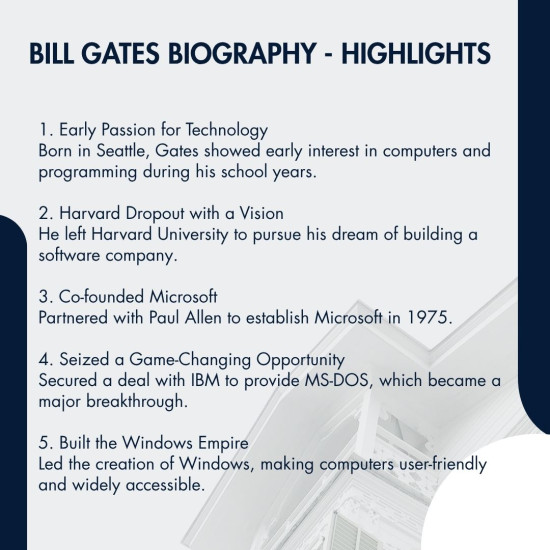
Bill Gates was born on October 28, 1955, in Seattle. From a young age, he displayed exceptional intelligence and curiosity, especially in mathematics and logic.
He attended Lakeside School, where he was first introduced to computers. This early exposure sparked his passion for programming. Gates later enrolled at Harvard University but dropped out to pursue his entrepreneurial dreams—an unconventional decision that would change the world.
3. Turning Point / Defining Moments
A defining moment came when Gates partnered with his childhood friend Paul Allen. Together, they saw the potential of microcomputers before most people did.
In 1975, they founded Microsoft with a vision: “A computer on every desk and in every home.”
Another major turning point was securing a deal with IBM to provide an operating system. This led to the creation of MS-DOS, which became the foundation of Microsoft’s dominance.
4. Career Journey / Rise to Success
Gates’ journey was marked by relentless ambition and strategic brilliance. Microsoft’s breakthrough came with the launch of the Windows operating system, which revolutionized user interaction with computers.
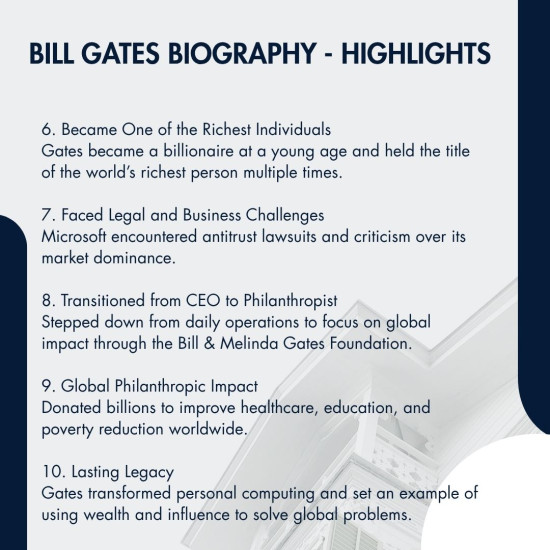
By the 1990s, Microsoft had become the world’s leading software company, and Gates became one of the youngest billionaires in history. His ability to anticipate industry trends and dominate markets made Microsoft a global powerhouse.
5. Achievements and Contributions
Co-founded Microsoft, the world’s largest software company
Led the development of MS-DOS and Windows OS
Became the richest person in the world multiple times
Established the Bill & Melinda Gates Foundation
Contributed billions toward global health, education, and poverty alleviation
Played a major role in advancing digital transformation worldwide
6. Mindset, Philosophy & Habits
Bill Gates is known for his deep thinking and learning mindset:
Think Long-Term: Focus on future impact rather than short-term gains
Read Extensively: Known to read 50+ books a year
Stay Curious: Constantly learning new ideas and technologies
Problem-Solving Approach: Break complex problems into smaller parts
Work Ethic: Early in his career, he worked intensely with minimal breaks
7. Challenges & Failures
Despite his success, Gates faced significant challenges:
Legal battles, including antitrust cases against Microsoft
Criticism for monopolistic business practices
Early software failures and product issues
Stepping down as CEO during intense industry competition
These challenges shaped his evolution from a fierce businessman to a more balanced leader and philanthropist.
8. Impact & Legacy
Bill Gates’ impact extends far beyond technology:
Revolutionized personal computing
Enabled businesses and individuals worldwide to go digital
Influenced generations of entrepreneurs and innovators
Through philanthropy, improved millions of lives globally
His legacy is a combination of technological revolution and humanitarian leadership.
9. Personal Life
Bill Gates was married to Melinda French Gates, and together they have three children. Though they later separated, both continue their philanthropic work.
Gates is known for his humble lifestyle, love for reading, and passion for solving global challenges like climate change and disease eradication
10. Key Lessons
Start early, but think big
Take bold risks (like dropping out of Harvard)
Focus on building products that solve real problems
1. IntroductionSteve Jobs was not just a tech entrepreneur—he was a visionary who reimagined how humans interact with technology. He didn’t merely bui..