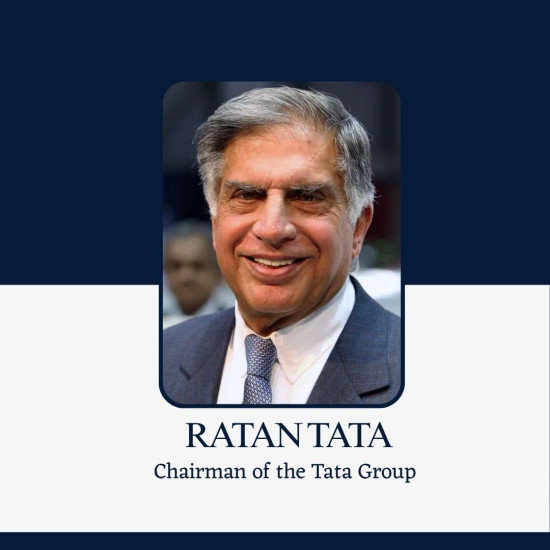
Ratan Tata is not just a business leader—he is a symbol of integrity, humility, and visionary leadership. As the former chairman of Tata Group, he transformed a traditional Indian conglomerate into a global powerhouse while maintaining deep-rooted values of ethics and nation-building. His journey reflects the rare combination of sharp business acumen and a compassionate heart.
2. Early Life & Background
Ratan Tata was born on December 28, 1937, in Mumbai, India, into the prestigious Tata family. He is the great-grandson of Jamsetji Tata, the pioneer of Indian industrialization.
Despite his privileged background, his childhood was not without challenges. His parents separated when he was young, and he was raised by his grandmother, Lady Navajbai Tata, who instilled in him strong values of discipline and compassion.
He pursued architecture and structural engineering at Cornell University and later completed the Advanced Management Program at Harvard Business School.
3. Turning Point / Defining Moments
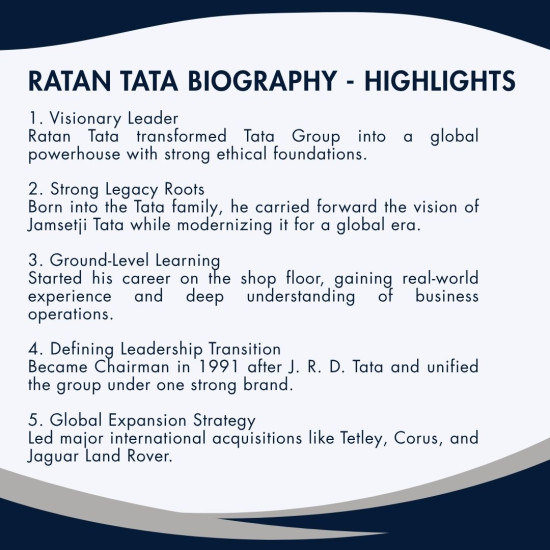
One of the most defining moments in Ratan Tata’s life came when he joined the Tata Group in 1962—not in a high position, but on the shop floor of Tata Steel. This hands-on experience gave him a deep understanding of ground realities.
Another turning point came in 1991 when he succeeded J. R. D. Tata as chairman of Tata Group. At that time, the group was fragmented, with individual companies operating independently.
His bold decision to unify the group under a single vision and brand identity reshaped the future of Tata.
4. Career Journey / Rise to Success
Ratan Tata’s leadership marked a new era of globalization for the Tata Group. He restructured the organization, focusing on innovation, efficiency, and international expansion.
Under his leadership, Tata Group made several landmark acquisitions:
Tetley (UK)
Corus (Europe)
Jaguar Land Rover (UK)
These acquisitions positioned Tata as a global brand.
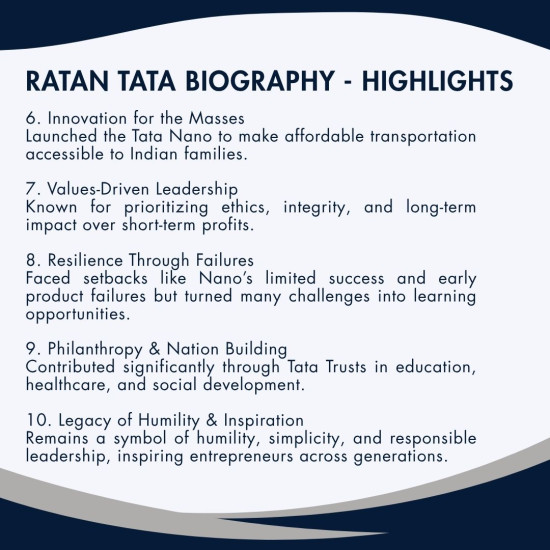
He also led the creation of the Tata Nano, envisioned as the world’s most affordable car, aiming to make mobility accessible to millions of Indians.
5. Achievements and Contributions
Transformed Tata Group into a global enterprise operating in 100+ countries
Increased group revenues from ~$5 billion to over $100 billion during his tenure
Pioneered India's global acquisition strategy
Strengthened brand Tata as a symbol of trust and ethics
Invested in startups and innovation ecosystems (e.g., Ola, Paytm)
Major contributor to philanthropy through Tata Trusts
His contributions extend beyond business into nation-building, social welfare, and innovation.
6. Mindset, Philosophy & Habits
Ratan Tata is known for his simple yet powerful philosophy:
Values over profits – Ethics always come first
Long-term vision – Focus on sustainable growth
Empathy-driven leadership – Care for employees and society
Risk-taking mindset – Bold decisions like global acquisitions
Humility – Despite immense success, he leads a simple life
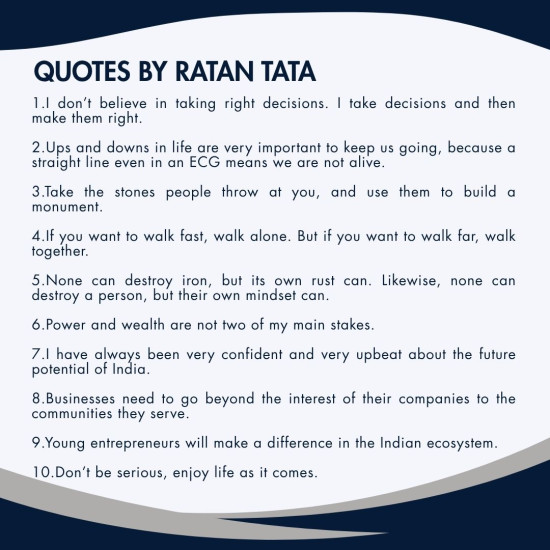
One of his famous beliefs: "I don't believe in taking right decisions. I take decisions and then make them right."
7. Challenges & Failures
Ratan Tata’s journey was not without setbacks:
The initial failure of the Tata Indica car, which was later turned into a success
Criticism during the Corus acquisition due to high costs
The Nano project, though visionary, did not achieve expected commercial success
Internal resistance when he tried to modernize and unify Tata Group
Despite failures, his resilience and learning mindset helped him turn challenges into opportunities.
8. Impact & Legacy
Ratan Tata’s legacy goes beyond business success:
He redefined Indian business leadership globally
Built trust as the core identity of Tata brand
Inspired generations of entrepreneurs and leaders
Created a model of ethical capitalism
Even after retirement, he continues to mentor startups and contribute to innovation.
His life stands as a blueprint for combining business excellence with human values.
9. Personal Life
Ratan Tata is known for his extremely private and simple personal life. He never married, though he once revealed he came close to marriage but circumstances prevented it.
He is an avid animal lover and actively supports animal welfare causes. His love for dogs is widely known.
Despite his global stature, he prefers a quiet life, away from luxury and media attention.
10. Key Lessons
Leadership is about values, not just vision
Start from the ground to understand reality
Think global, act ethical
Failures are stepping stones, not setbacks
Success is meaningful only when it benefits society
1.IntroductionRatan Tata is not just a business leader—he is a symbol of integrity, humility, and visionary leadership. As the former chairman of Tata..